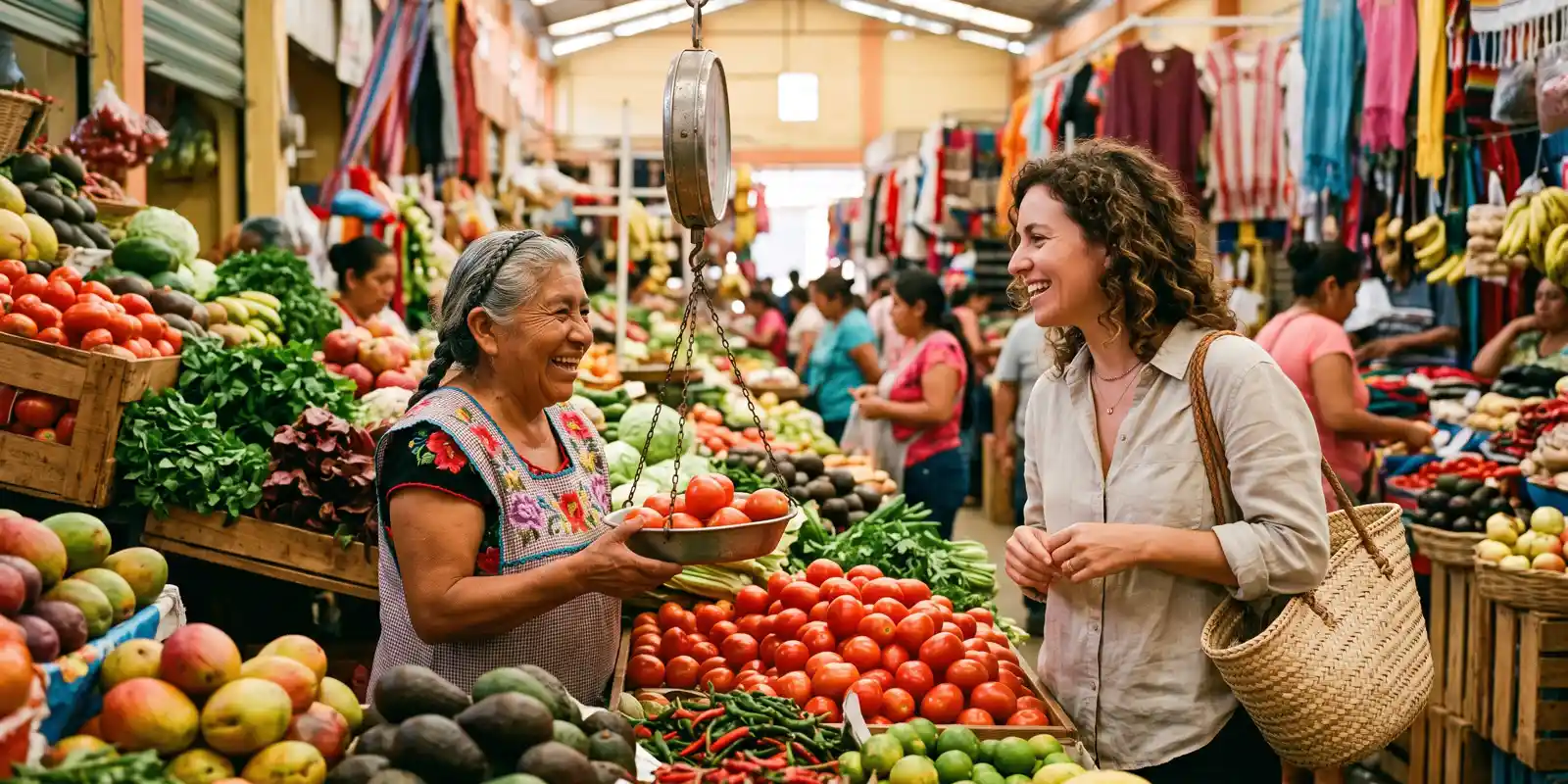
The expat bubble is real, and English is what inflates it
Here's a pattern almost every long-term expat in the Riviera Maya recognizes, even if nobody enjoys saying it out loud: after two years here, their social circle is other foreigners, plus a handful of locals who speak excellent English, usually people they met through work or business.
That's not a personal failure. It's arithmetic. If you only speak English, your potential friends are limited to the fraction of locals fluent enough to sustain a friendship in your language, and most of those encounters happen in commercial settings, your server, your property manager, your dive instructor, where the relationship has a built-in ceiling. Warm? Often genuinely. A friendship that survives outside the transaction? Rarely.
Meanwhile the actual social life of Playa del Carmen and Tulum, the birthday parties, the carne asadas, the football teams, the extended-family Sundays, runs in Spanish. It's not closed to you. It's simply happening in a language you've opted out of. Nobody will send you an invitation to translate yourself in; the door isn't locked, but you're the one who has to walk through it.
And this matters more than most guides admit, because loneliness is the quiet problem of expat life. Paradise with a shallow social circle stops feeling like paradise somewhere around the second year. The good news, and the entire point of this article: the amount of Spanish that changes this is dramatically smaller than fluency. You don't need to debate philosophy. You need to be able to show up, greet people properly, joke a little, and come back next week.
The Spanish of friendship is smaller than you think
Nobody ever became friends through perfect grammar. Friendship Spanish is a specific, learnable, surprisingly short list.
- Greetings done right. In Mexico, greeting people individually, with eye contact and their name when you know it, is not optional politeness; it's the social protocol that marks you as someone who gets it. Buenos días, ¿cómo amaneciste? to a neighbor does more for your social life than a hundred vocabulary words.
- Small talk starters. ¿Cómo va tu día? ¿Qué tal el calor? ¿Cómo está la familia? Mexican small talk warms the room before anything else happens. Learn five openers and you can start a conversation anywhere from the tortillería line to the gym.
- The follow-up question. The real friendship skill is asking one more thing: ¿y eso? ¿cómo salió? ¿y tu hijo, ya mejor? Remembering last week's conversation and asking about it is how acquaintance becomes affection, in any language, with beginner grammar.
- Warmth phrases. ¡Qué gusto verte! Saludos a tu familia. Aquí andamos. These carry enormous social weight per syllable.
- Laughing at yourself. Mi español es un trabajo en progreso plus a grin defuses every error you'll ever make. Mexicans are champions of self-deprecating humor; joining in, badly, in Spanish, beats observing perfectly in English.
Notice what's absent: the subjunctive, past tenses, anything from level four. All of this is early-beginner material. The gap between "no Spanish" and "greets warmly, asks about your day, laughs easily" is a few months of consistent learning, and socially, it's the single biggest jump you will ever make.
Ready to actually speak?
Take the placement test and start at exactly your level. In person in Playa del Carmen or Tulum, or live online.
Learn the Spanish that opens doors — free placement test and trial classWhere friendships actually happen in the Riviera Maya
Friendship needs repeated, unforced contact, seeing the same people regularly with no agenda. Bars full of strangers are terrible at this. These places are excellent at it.
- Your own street. The most underrated social venue in Mexico. The tiendita owner, the neighbors watering plants at dusk, the señora selling tamales on Sunday: these are daily-contact relationships waiting for consistent greetings. In Mexican neighborhood culture, months of warm buenos días ripen naturally into conversations, favors and eventually invitations.
- Markets and fondas, not supermarkets. Buy your fruit from the same frutería stall every week and by the second month, they know your name and your usual. The relationship comes free with the mangoes; supermarket checkouts sell no such thing.
- Sports and hobbies with locals in them. Football and volleyball groups, running clubs, salsa classes, fishing, box gyms. Shared activity does the heavy conversational lifting, and effort in Spanish inside a team earns disproportionate goodwill.
- Cenote and beach life, local style. Weekends at cenotes and public beaches are Mexican family social life at its most open. Going with one local acquaintance tends to multiply into meeting their entire circle, because socializing here is expansive by default: someone will hand you a taco and ask where you're from.
- Fiestas, when invited: go. The invitation to a birthday, a posada, a christening is the door actually opening. Show up, bring something small, greet everyone individually, stay past your comfort zone. Declining twice usually means the invitations stop.
The pattern across all of these: frequency beats intensity. Ten short warm encounters build more friendship here than one long dinner. Choose your regular places and keep showing up.
The cultural codes that make or break it
Language opens the door; culture determines what happens inside. A few codes worth knowing, because getting them right earns you enormous credit and getting them wrong quietly costs you invitations.
Warmth precedes business, always. Launching straight into your question, at a shop, with a neighbor, in a WhatsApp message, reads as cold. The greeting and a beat of small talk come first, every time. It costs twenty seconds and it's the difference between being efficient and being liked.
Time is elastic; take it as hospitality, not disrespect. A party that starts at 7 fills up at 9. Ahorita means anything from "right now" to "eventually." Expats who relax about this get invited back; the ones who bring punctuality lectures don't.
Reciprocate, don't keep score. Mexican social life flows on small generosities: the extra tamales sent over, help carrying something, an invitation to eat. Accept graciously and reciprocate in your own currency, but never make it transactional. Refusing offered food or hospitality repeatedly, even politely, creates real distance.
Family is the center of gravity. Being introduced to someone's family isn't casual; it's promotion. Ask about people's kids and parents by name once you know them. And expect friendships here to come as networks, not individuals: befriend one person and you've been adopted by a group chat, a cousin who fixes cars, and a standing invitation to Sunday comida.
Effort in Spanish is itself a social gesture. Every stumbling sentence says I'm trying to meet you where you live, and Mexicans reward that message with patience and warmth that fluent-but-entitled visitors never receive. Your accent isn't a liability here. It's proof of respect.
How classes speed this up (it's not just vocabulary)
You can assemble friendship Spanish from apps and phrasebooks, slowly. A good class compresses the timeline in ways that matter specifically for your social life.
You rehearse the encounter before the encounter. Task-based classes simulate exactly the situations above, greeting, small talk, invitations, gentle joking, so the first time you banter with your neighbor isn't also your first attempt ever. Confidence in the street is manufactured in the classroom.
You learn the Spanish people actually speak here. Textbook Spanish is nobody's Spanish. Classes taught by local teachers get you the register of the Riviera Maya: the courtesy formulas, the softeners, what ahorita and ¿mande? really mean, when tú versus usted, the difference between what's friendly and what's overfamiliar.
The class itself is a social circle. An underrated effect: your classmates are other expats and travelers actively building lives here, and practicing conversation together for months creates its own friendships. Many students' first dinner invitations in Mexico come from the seat next to them.
Someone corrects the errors that matter socially. A teacher distinguishes the mistakes nobody cares about (gender slips, wrong past tense) from the few that actually land wrong, and lets you keep talking through the rest. That editorial judgment is precisely what no app provides.
If you want that head start: Idiomarcui is a language school founded in 2019 with campuses in Playa del Carmen (Calle 72) and Tulum, teaching Spanish for foreigners with a communicative, task-based approach, in-person twice a week, Saturdays, or live online. Start with the free placement test and a trial class. The friendships are already out there, at the frutería, on the football pitch, at the next table. Spanish is how you show up for them.
Your free trial class is waiting
Visit the school, take your placement test and see why at Idiomarcui you speak from day one.
Learn the Spanish that opens doors — free placement test and trial classFrequently asked questions
Can I make Mexican friends without speaking Spanish?
A few, mostly locals fluent in English whom you meet through work or business, but the ceiling is low: Mexico's real social life, parties, family gatherings, sports, neighborhood culture, runs in Spanish. Even beginner Spanish delivered with warmth expands your possible friendships enormously.
How much Spanish do I need to socialize in Mexico?
Much less than fluency. Proper greetings, five small-talk openers, follow-up questions like "¿y cómo salió?", warmth phrases and the ability to laugh at your own mistakes, all early-beginner material. Socially, the jump from zero Spanish to warm basic Spanish is the biggest one you'll ever make.
Where do expats actually meet locals in Playa del Carmen and Tulum?
In places with repeated, unforced contact: your own street and tiendita, a regular market stall, football or volleyball groups, salsa classes, gyms, and cenote or beach weekends with local acquaintances. Frequency beats intensity: ten short warm encounters build more friendship than one long dinner.
What cultural mistakes push Mexican friends away?
Skipping greetings and jumping straight to business, treating elastic time as disrespect, refusing offered food or hospitality repeatedly, and keeping score on generosity. Warmth precedes everything in Mexico; twenty seconds of small talk is the difference between being efficient and being liked.
Do Spanish classes actually help with making friends?
Yes, in three ways beyond vocabulary: task-based classes let you rehearse greetings, small talk and invitations before the real encounter; local teachers teach the actual register of the Riviera Maya; and your classmates, other expats building lives here, often become your first social circle.